

Vibe-Coding
Build to Understand

Vibe-coding isn’t a trend; it’s a perspective shift. The fastest way to rethink security is to build something yourself. As a non-developer, vibe-coding let me create while learning how to secure what I built.
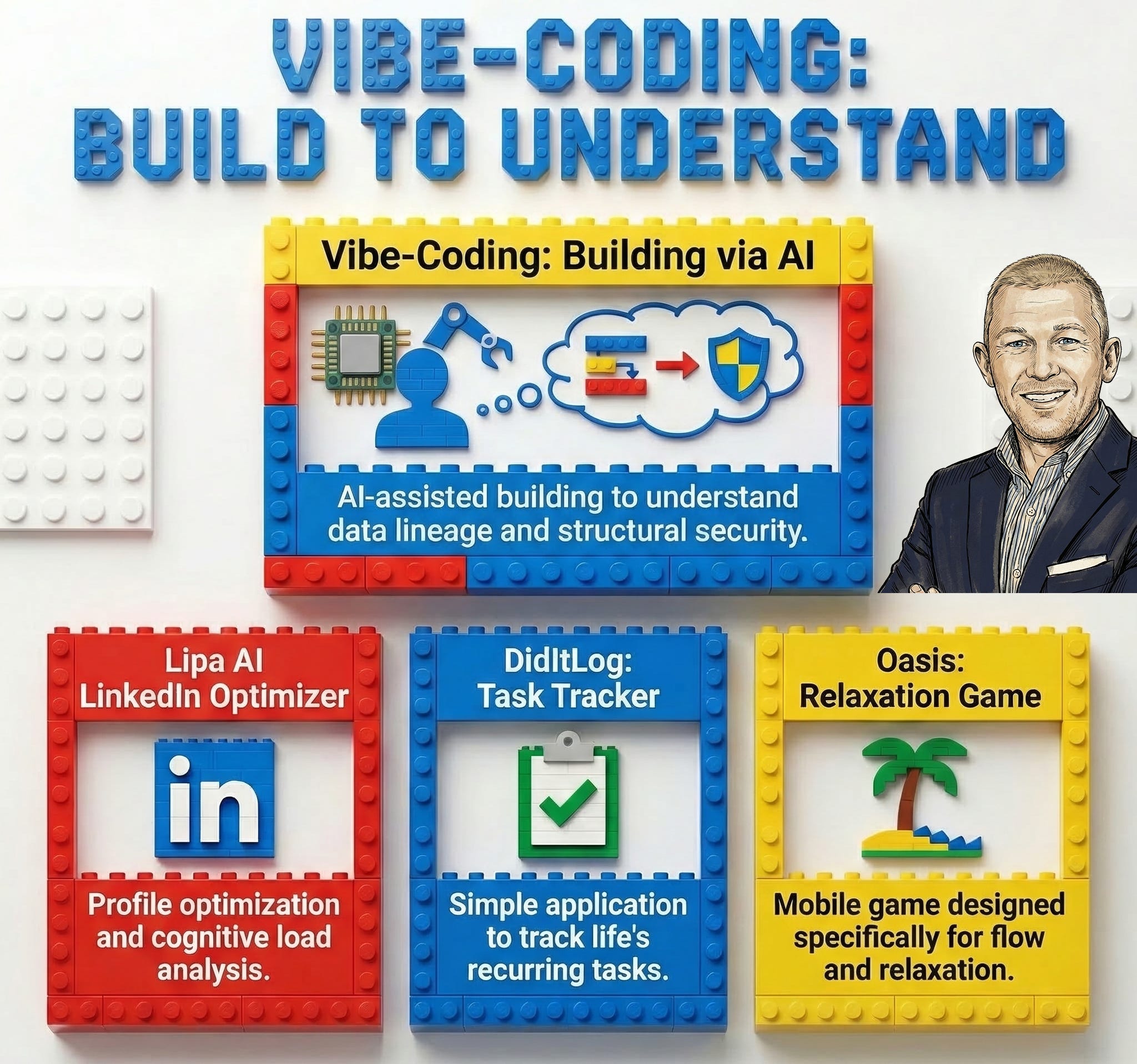
I started experimenting with AI-assisted building to see what was possible. While I don't know if I'll be writing production code for a living, the journey has been 100% worth it for a different reason.
When you build an application from the ground up, you stop seeing "security" as a checklist and start seeing it as a structural necessity.
This has also become my creative outlet.
I used to spend my time behind a camera, but since I’m home more often now, building has replaced photography as my creative outlet. It is a different kind of "shot composition," but the satisfaction of a clean, functional output is the same.
So far, I’ve used this "vibe-coding" approach to bring three ideas to life:
➡️ Lipa-AI: A tool for LinkedIn profile optimization and cognitive load analysis.
➡️ DidItLog: A simple way to track life’s recurring tasks.
➡️ Oasis: A mobile game designed specifically for relaxation and flow.
Building isn’t just for developers anymore.
It’s becoming essential for anyone responsible for defining risk.
You don’t need to write production code, but you do need to understand how things are actually put together.
AI is compressing the gap between idea and implementation.
That changes what “secure by design” really means.
If you want to secure the future of AI, you have to spend some time under the hood.